
Authentic learning is totally possible online! I also do not believe being authentic has to deviate from formalities. I’ll explain more on that in the last section of this post that analyses the pros and cons of casual and strict guidelines.
I think it’s also important to make a differentiation between authentic teaching and authentic learning. Like our other Faculty Focus article, this author’s take on authentic learning is heavily based on real-world application. I’ve put some thought into how this differs from Seimen’s connectivism, and perhaps it’s all drawing on the same concepts that help maintain engagement and fulfilment in learning environments. However, when we shift the focus away from the learner, and onto the teacher, we are tapping into faculty development. So when we ask about “authentic or formal” instructional style, I think more along the lines of instructor presence and expression, rather than the learner experience within the context of real-world applications.
Examples of Authentic Teaching and Learning
I want to focus on authentic teaching techniques. Because I enjoy seeing how other countries also teach the same topics, I wanted to feature the work of Austrailian educator Cat Stone . In the video I linked, you’ll see that they link the study (humanities, bio, etc.) to real-world scenarios. They accomplish this through team teaching and call this process “Authentic Teaching” because of this real-world links that ask students to build on their experiences to form new meaning. What I find to be more authentic is her ability to focus on her personal traits that leverage the instruction and helps her form personal relationships with students. This may be a face-to-face example, but it’s undoubtedly the foundation of all authentic education. In the end, the educator stays true to themselves and allows the students to maintain their identity through the learning experience.
Casual vs Strict Guidelines — Everything in moderation
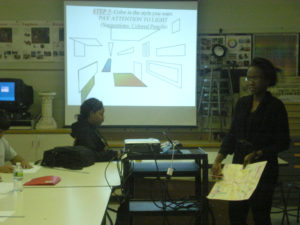
 I think online learning follows the same principles as face-to-face education. As a former teacher (cue two throwback pictures!), I knew that I needed to make connections with my students while keeping my classroom as orderly and nurturing as possible. I remember my mentor teacher telling me that whatever I do in the classroom, I have to stay true to myself. If I chose a dramatic teaching style, or I was structured, or somewhere in between, I would have to maintain a style that reflected my philosophy and beliefs. I think online learning, particularly where we design points of interaction, allow us to show off our personalities. Looking at each of our blogs and how we choose to develop our blog posts help us maintain a level of authenticity that would be void in paper responses or discussion forums. To that extent, we are formal in how we decide what outcomes are necessary and articulate our expectations around performance. But how we authentically engage with students and help them get to that goal supports those formal requirements, not contradicts them. You can be authentic and formal at the same time without sacrificing either one. In our teaching and other forms of expression, we can interject humor, emotion, passion, and more into each and everything we do.
And to me, that is what it means to be authentic.